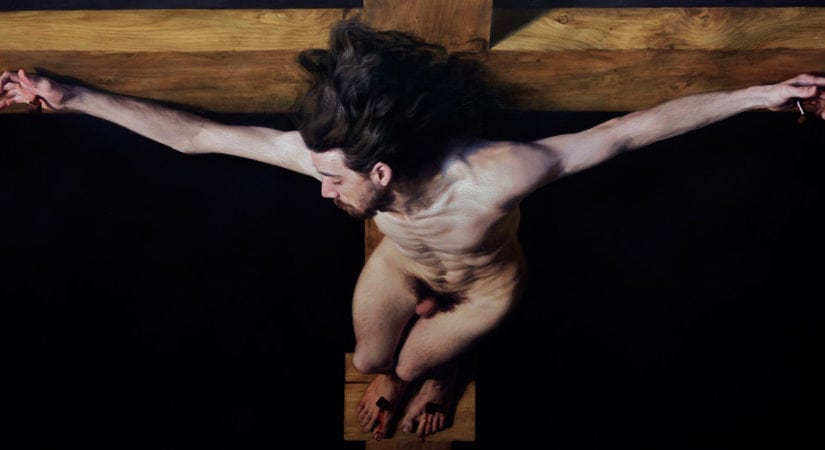
Louis Smith’s painting St Dismas was inspired by the Christian theme of redemption and the belief that it is never too late to change. For Louis, the story of St Dismas is one of hope, forgiveness, and transformation. It reminds us that no matter what we have done in the past, we do not have to carry those mistakes into the future.
In creating the painting, Louis wanted to capture a feeling of liberation and spiritual freedom. St Dismas is depicted almost like a bird soaring through space, his body stretched wide like an eagle riding the wind. The upward movement, flowing hair, and open atmosphere are intended to suggest release from guilt and the promise of a new beginning.
The story of St Dismas is one of the most powerful examples of redemption in the Christian tradition. According to Pope Saint Gregory the Great, he was “guilty of blood, even his brother’s blood.” A thief and criminal, Dismas spent his life committing serious wrongs before being crucified alongside Jesus and another criminal, Gestas. As they hung on their crosses, Dismas defended Jesus from Gestas’s insults and asked to be remembered. In response, Jesus forgave him and promised him a place in heaven.
As recorded in Luke 23:39–43, while one criminal mocked Jesus, Dismas rebuked him and said, “This man has done nothing criminal.” He then asked, “Jesus, remember me when you come into your kingdom.” Jesus replied, “Amen, I say to you, today you will be with me in Paradise.” Through this encounter, the painting seeks to communicate a timeless message of mercy, forgiveness, and the possibility of redemption for all.
Manchester Cathedral Exhibit
Louis Smith’s painting The Good Thief was exhibited at Manchester Cathedral, where it was used as a backdrop for the Cathedral’s Easter celebrations. The work’s themes of redemption, forgiveness, and hope resonated strongly with the occasion, providing a powerful visual focus for reflection on the story of St Dismas and the Christian message of salvation.